Siddhant

thewebsitemakers

Practical Approaches

Practical Approaches: Techniques, Reflections, and Real-World Applications for Students and Practitioners Osteopathy is as much an art as it is a science. While theory provides the foundation, true understanding emerges through practice—through touch, observation, and reflection. For students and practitioners alike, developing proficiency in osteopathic techniques requires not only manual skill but also an appreciation for the body’s subtleties and the therapeutic relationship between patient and practitioner. Core Techniques in Osteopathic Practice Reflection in Practice Reflection is a crucial component of professional growth. Students are encouraged to develop self-awareness by reviewing their techniques, clinical decisions, and patient responses. Practitioners benefit from ongoing reflection to refine intuition and maintain a patient-centered approach. Real-World Applications Osteopathic principles can be applied across diverse healthcare settings—from sports rehabilitation and chronic pain management to pediatric and geriatric care. In hospitals, clinics, and private practices, osteopaths collaborate with medical professionals to offer integrated, evidence-informed treatment. Conclusion For both aspiring and seasoned osteopaths, practical mastery comes from balancing technique with empathy and critical thinking. The most effective treatments are not just about manipulation—they arise from understanding, presence, and a commitment to helping the body find its natural state of equilibrium.

Practical Approaches Read More »
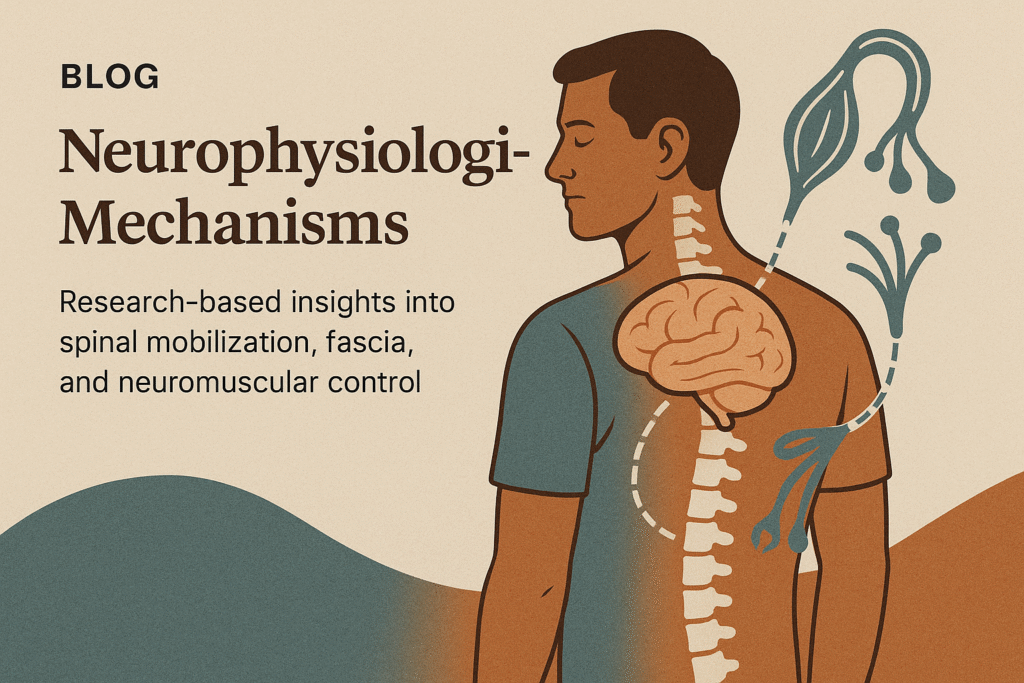
Neurophysiological Mechanisms

Neurophysiological Mechanisms: Research-Based Insights into Spinal Mobilization, Fascia, and Neuromuscular Control The human body functions as an intricate network of communication between the brain, nerves, and musculoskeletal system. Osteopathy recognizes this deep interconnection, and modern research increasingly supports its influence on neurophysiological mechanisms such as spinal mobilization, fascia dynamics, and neuromuscular control. The Science Behind Spinal Mobilization Spinal mobilization is a gentle, controlled technique used by osteopaths to restore mobility and relieve tension in the spine. Beyond improving posture and reducing pain, this technique affects the central nervous system by modulating pain perception and improving reflex activity. Studies suggest that mobilization enhances proprioceptive feedback—our body’s ability to sense position and movement—helping the nervous system recalibrate for better coordination and stability. The Role of Fascia in Movement and Sensation Fascia, the body’s connective tissue network, plays a crucial role in transmitting mechanical forces and facilitating communication across muscles and organs. When fascia becomes restricted, it can impede movement and disrupt neural signaling. Osteopathic manipulation restores fascial elasticity, improving fluid exchange, circulation, and the body’s sensory input pathways. This in turn enhances motor control and tissue healing. Neuromuscular Control: The Mind-Body Connection Neuromuscular control refers to the body’s ability to coordinate movement efficiently through muscle activation patterns. Osteopathic interventions influence this control system by optimizing how nerves send and receive signals. Through techniques that reduce muscular tension and enhance joint movement, osteopathy supports smoother, more responsive motor activity. Bridging Traditional Philosophy with Modern Science What makes osteopathy unique is its balance between traditional wisdom and scientific understanding. By addressing the neurophysiological mechanisms underlying spinal function, fascia, and neuromuscular control, osteopathy not only alleviates discomfort but enhances overall body intelligence. This approach promotes resilience, fluidity, and balance—foundations of long-term health. Conclusion Emerging research continues to validate osteopathy’s profound impact on the body’s internal communication systems. Through precise manual techniques, practitioners can influence neurological feedback loops, improve movement efficiency, and support holistic recovery. Understanding these neurophysiological mechanisms brings us one step closer to integrating science and holistic healing in modern healthcare.

Neurophysiological Mechanisms Read More »

Sports & Movement

Sports & Movement: Exploring the Role of Osteopathy in Improving Balance, Agility, and Coordination Athletes and active individuals constantly push their bodies to perform at their best. Whether it’s running, jumping, or fine-tuned movement, optimal coordination and balance are crucial for peak performance. Osteopathy offers a unique, holistic approach that enhances athletic function, prevents injuries, and supports overall body harmony. Osteopathy in sports is not limited to treating injuries—it plays a vital role in optimizing biomechanics and neuromuscular coordination. By focusing on the interconnection between muscles, joints, and the nervous system, osteopaths help athletes unlock their full physical potential. How Osteopathy Supports Athletic Performance The Mind-Body Connection Osteopathy also addresses the psychological aspect of movement. By relieving physical tension and improving body awareness, athletes experience greater confidence and focus. This balance of mind and body enhances not only performance but also long-term well-being. Conclusion Osteopathy stands as a vital ally for athletes seeking better balance, agility, and coordination. It promotes a deeper understanding of how the body moves and recovers, ensuring that every muscle and joint works in harmony. Whether for elite athletes or everyday movers, osteopathy provides the foundation for sustainable, high-performance health.

Sports & Movement Read More »

Osteopathic Philosophy

Understanding the Osteopathic Philosophy: A Holistic Approach to Health Osteopathy is more than just a system of healthcare—it’s a philosophy rooted in the belief that the human body possesses an innate ability to heal and maintain balance when properly supported. Developed by Dr. Andrew Taylor Still in the late 19th century, osteopathy emphasizes the interrelationship between the body’s structure and function. This approach views the individual as an integrated whole, rather than a collection of separate parts or symptoms. At its core, the Osteopathic Philosophy revolves around four key principles: The Osteopathic Process The osteopathic process typically follows four interconnected stages: Why Osteopathy Matters In an age of fast-paced living and stress-induced ailments, osteopathy provides a compassionate, hands-on approach that promotes wellness from within. It bridges the gap between traditional medicine and holistic care, helping individuals achieve harmony in body, mind, and spirit. Whether dealing with chronic pain, stress, or simply seeking better alignment and vitality, osteopathy offers a philosophy and practice that truly honors the body’s wisdom.

Osteopathic Philosophy Read More »