
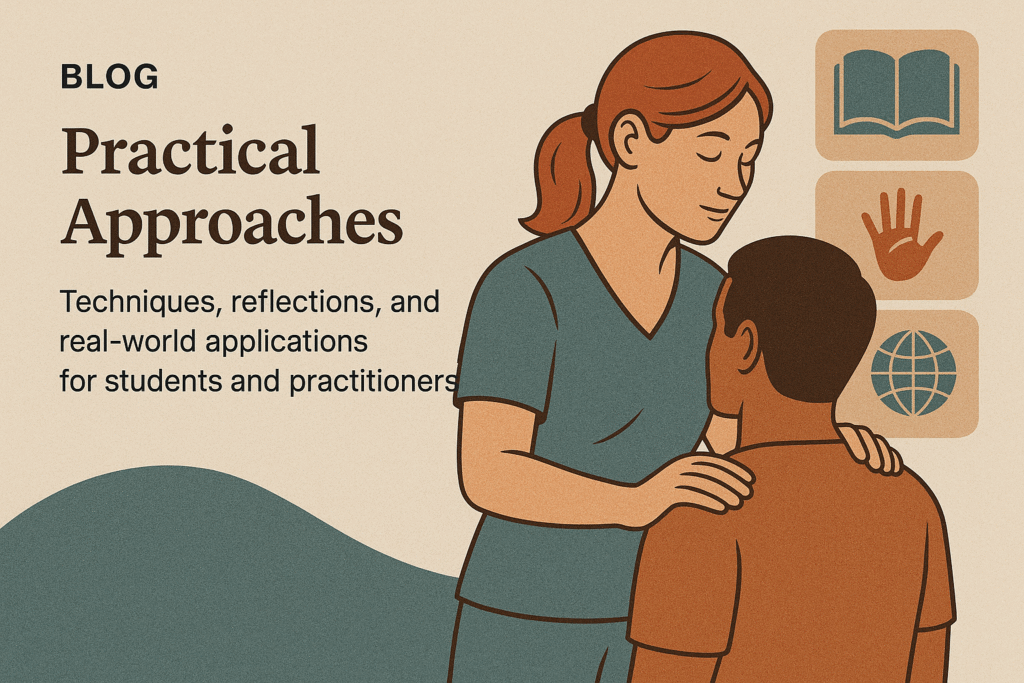
Practical Approaches: Techniques, Reflections, and Real-World Applications for Students and Practitioners
Osteopathy is as much an art as it is a science. While theory provides the foundation, true understanding emerges through practice—through touch, observation, and reflection. For students and practitioners alike, developing proficiency in osteopathic techniques requires not only manual skill but also an appreciation for the body’s subtleties and the therapeutic relationship between patient and practitioner.
Core Techniques in Osteopathic Practice
- Soft Tissue Manipulation
This technique targets muscles, tendons, and fascia to release tension, improve circulation, and enhance tissue mobility. It is often used as a preparatory step before deeper joint work. - Articulation and Mobilization
Gentle, rhythmic movements are used to improve the range of motion in joints. By restoring movement to restricted areas, these techniques help reestablish structural and functional balance. - High-Velocity, Low-Amplitude (HVLA) Thrusts
Applied with precision and speed, HVLA techniques address joint restrictions and improve spinal alignment. These adjustments can have immediate effects on mobility and pain relief. - Cranial Osteopathy
This subtle approach focuses on the rhythmic motion of cerebrospinal fluid and the gentle movement of cranial bones. It is especially useful for addressing stress-related dysfunctions and improving systemic balance. - Visceral Manipulation
Internal organs are mobilized through gentle manual contact to enhance their mobility and function. This helps regulate systems such as digestion, respiration, and circulation.
Reflection in Practice
Reflection is a crucial component of professional growth. Students are encouraged to develop self-awareness by reviewing their techniques, clinical decisions, and patient responses. Practitioners benefit from ongoing reflection to refine intuition and maintain a patient-centered approach.
Real-World Applications
Osteopathic principles can be applied across diverse healthcare settings—from sports rehabilitation and chronic pain management to pediatric and geriatric care. In hospitals, clinics, and private practices, osteopaths collaborate with medical professionals to offer integrated, evidence-informed treatment.
Conclusion
For both aspiring and seasoned osteopaths, practical mastery comes from balancing technique with empathy and critical thinking. The most effective treatments are not just about manipulation—they arise from understanding, presence, and a commitment to helping the body find its natural state of equilibrium.