
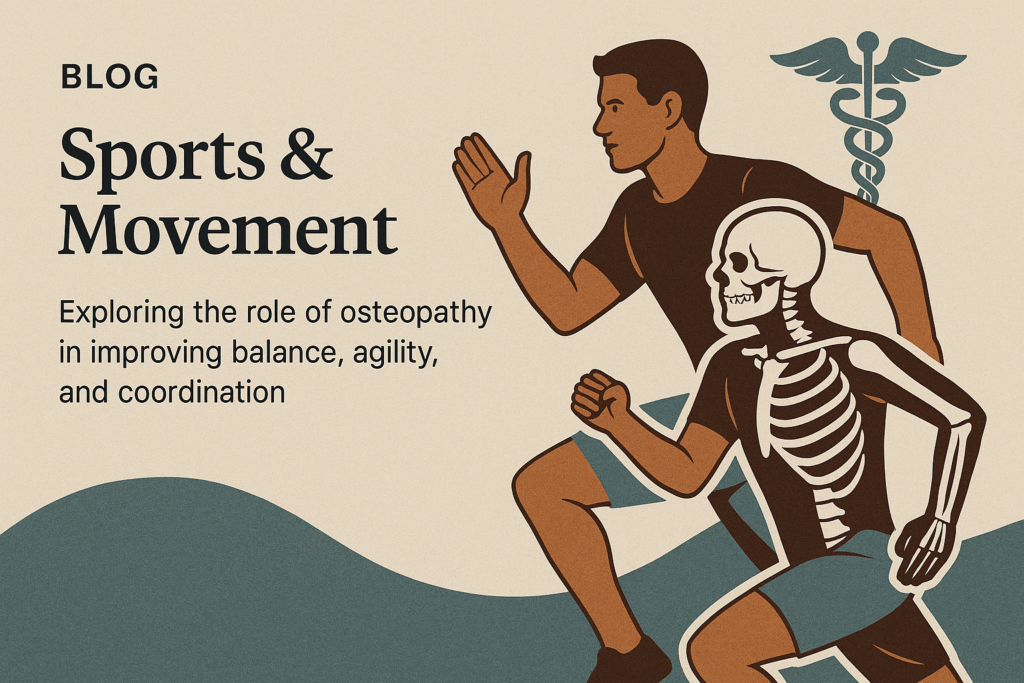
Sports & Movement: Exploring the Role of Osteopathy in Improving Balance, Agility, and Coordination
Athletes and active individuals constantly push their bodies to perform at their best. Whether it’s running, jumping, or fine-tuned movement, optimal coordination and balance are crucial for peak performance. Osteopathy offers a unique, holistic approach that enhances athletic function, prevents injuries, and supports overall body harmony.
Osteopathy in sports is not limited to treating injuries—it plays a vital role in optimizing biomechanics and neuromuscular coordination. By focusing on the interconnection between muscles, joints, and the nervous system, osteopaths help athletes unlock their full physical potential.
How Osteopathy Supports Athletic Performance
- Improving Balance:
Osteopaths assess and treat postural imbalances that may hinder stability. Through targeted manipulation and soft-tissue techniques, they enhance proprioception—the body’s sense of spatial awareness—resulting in improved balance and control. - Enhancing Agility:
Agility requires fluid, coordinated movement. Osteopathic treatment ensures that joints and muscles move freely without restrictions, reducing stiffness and enhancing response time. This is particularly beneficial in sports requiring quick direction changes, like football, tennis, and basketball. - Boosting Coordination:
Coordination depends on seamless communication between the brain and body. By improving circulation, nerve function, and musculoskeletal alignment, osteopathy supports efficient neuromuscular signaling, leading to smoother, more synchronized movement. - Preventing and Recovering from Injuries:
Osteopathic practitioners identify areas of weakness or tension before they develop into injuries. When injuries occur, osteopathy aids recovery by improving blood flow, reducing inflammation, and supporting tissue repair naturally.
The Mind-Body Connection
Osteopathy also addresses the psychological aspect of movement. By relieving physical tension and improving body awareness, athletes experience greater confidence and focus. This balance of mind and body enhances not only performance but also long-term well-being.
Conclusion
Osteopathy stands as a vital ally for athletes seeking better balance, agility, and coordination. It promotes a deeper understanding of how the body moves and recovers, ensuring that every muscle and joint works in harmony. Whether for elite athletes or everyday movers, osteopathy provides the foundation for sustainable, high-performance health.